Views: 0 Author: Site Editor Publish Time: 2025-11-24 Origin: Site
Vacuum Circuit Breaker Maintenance Guide: Best Practices for Long-Term Performance
1. Why Vacuum Circuit Breaker Maintenance Matters
2. Understanding VCB Lifespan and Common Failure Modes
3. Regular Maintenance Checklist
5. Warning Signs That Indicate Maintenance Is Needed
6. Maintenance vs. Replacement Decision Guide
7. Safety Precautions During Maintenance
8. Conclusion: Maximize VCB Performance Through Proactive Maintenance
Reliability depends on more than just maintenance. Discover the engineering foundation behind these protocols in The Ultimate VCB Guide 2026.
Vacuum circuit breakers (VCBs) are crucial for modern electrical systems, safeguarding infrastructure in industrial plants, renewable energy facilities, and smart grids. Known for reliability and low maintenance, proper upkeep is vital for long-term performance, safety, and cost-effectiveness.
A well-maintained VCB can operate reliably for 20-30 years, performing thousands of operations without significant degradation. Neglecting maintenance can lead to failures, costly downtime, and safety hazards.
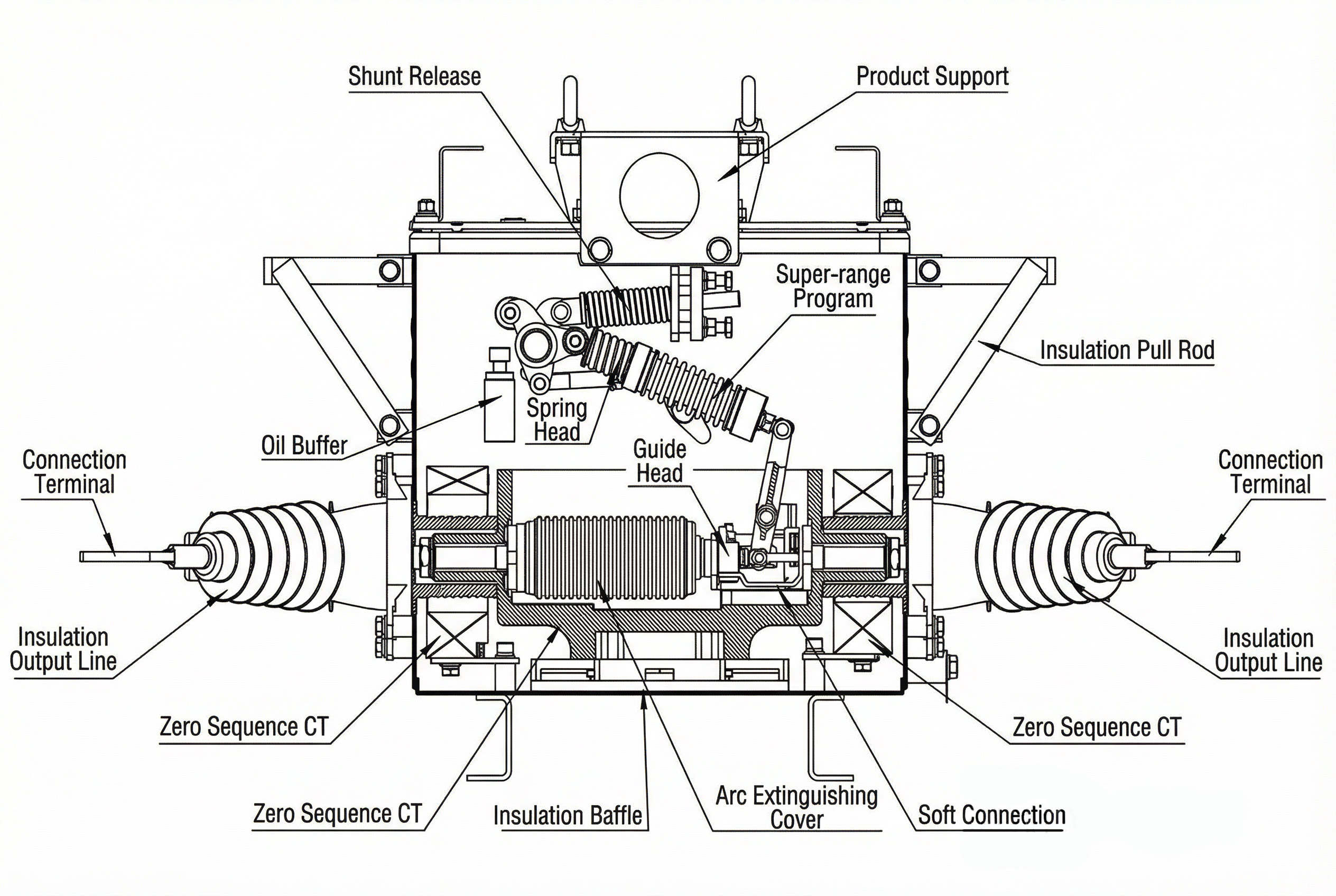
Modern VCBs typically offer:
Mechanical life: 10,000-30,000 operations
Electrical life: 50-100 full load interruptions
Service life: 20-30 years with proper maintenance
Vacuum degradation: Loss of vacuum reduces dielectric strength and interrupting capability.
Contact erosion: Arc exposure wears down contacts, affecting performance.
Operating mechanism issues: Springs and coils can wear out, causing slow operation.
Auxiliary component failure: Control circuits and interlocks may malfunction due to aging.
Insulation breakdown: Outdoor units face degradation from UV, moisture, and contamination.
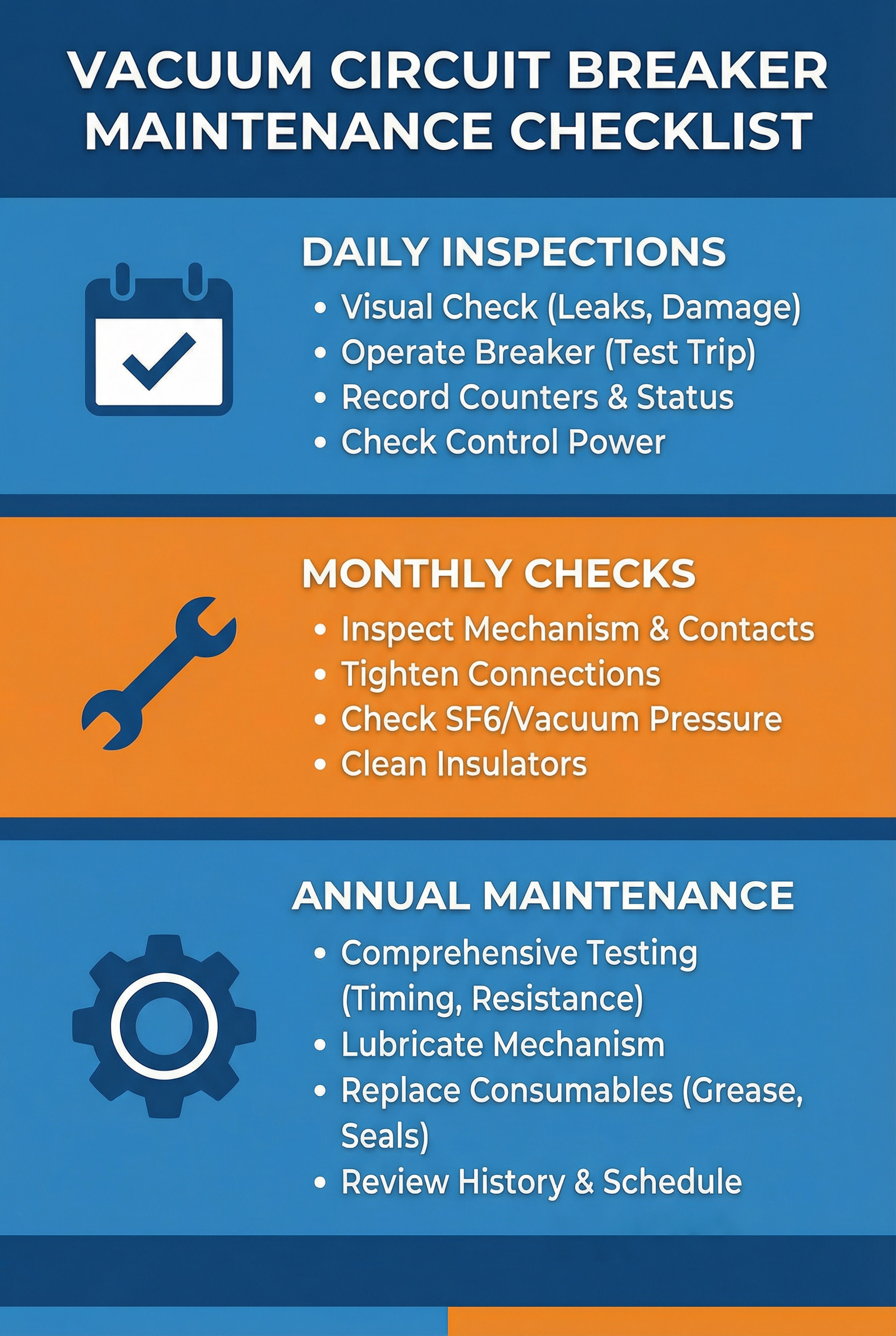
For critical installations, daily checks should include:
Verify position indicators
Check for unusual noises or damage
Confirm control power availability
Review alarm indications
Inspect for overheating
Mechanical operation: Test manual charging mechanism
External inspection: Check for loose connections or corrosion
Enclosure integrity: Verify weatherproofing seals
Control circuit: Test indicator lamps
Cleaning: Remove dust and debris
Electrical Testing:
Contact resistance measurement
Insulation resistance testing
High-voltage withstand test
Auxiliary circuit tests
Mechanical Inspection:
Measure operating times
Check contact travel
Inspect spring mechanism
Verify interlock operation
Lubricate moving parts
Vacuum Integrity Testing:
Perform vacuum bottle check
Inspect for cracks or discoloration
Review vacuum pressure limits
Vacuum Interrupter Bottles
Look for silver-gray deposits indicating vacuum loss. Perform high-voltage tests regularly.
Contact System
Monitor through resistance measurements, visual inspection, and thermal imaging.
Operating Mechanism
Ensure proper spring tension, lubrication, alignment, and coil resistance.
Immediate Action Required
Contact a technician if you observe:
Loud buzzing or humming
Visible arcing or sparking
Failure to operate
Unusual odors
Visible smoke or flames
Tripped breaker without overload
Schedule Maintenance Soon
Plan maintenance if you notice slow operation, increased noise, frequent tripping, control malfunctions, elevated temperature, or corrosion.
When to Maintain
Continue maintenance if the breaker is within service life, operation counts are below 70%, no critical failures, parts are available, and costs are under 30% of replacement.
When to Replace
Consider replacement if age exceeds 25-30 years, vacuum bottles degrade, repeated failures occur, technology is obsolete, or costs approach 50% of new equipment.
Isolation procedures:
De-energize and verify zero voltage
Apply lockout/tagout
Discharge stored energy
Wait for cooling
Verify PPE
Essential PPE: Arc-rated clothing, insulated gloves, safety glasses, hard hat, and face shield.
Always test circuits, maintain approach distances, use insulated tools, work with a partner, follow procedures, and document work.
X-ray hazard: Replace damaged bottles immediately
Implosion risk: Handle bottles carefully
Contact material: Follow handling procedures for beryllium
High voltage stored energy: Discharge capacitive elements
Vacuum circuit breakers are a significant investment. By following inspection schedules, monitoring components, and responding to warning signs, you can extend equipment life, reduce failures, improve safety, maintain compliance, and optimize costs.
At Fenarro, we manufacture high-quality VCBs designed for minimal maintenance and maximum reliability. Our products comply with IEC 62271-100 and GB standards, using advanced materials and proven designs.
Whether specifying new equipment or evaluating installations, our team can help you select the optimal VCB, develop maintenance programs, source parts, and provide support and training.
Contact Fenarro today to learn how Fenarro's VCBs can provide decades of reliable service.
Ethan
With over 16 years of experience in high-voltage electrical equipment, Ethan‘s current focus is on HV switchgear and system solutions for industrial and renewable energy sectors.He specializes in HV SF6 and vacuum circuit breakers for outdoor applications, indoor HV vacuum circuit breakers, disconnect switches, air-insulated switchgear (AIS), fuses, surge arresters, transformer neutral equipment, and vacuum load break switches.As an industry columnist and technical consultant, he provides reliable, practice-based insights to help engineers improve system reliability and operational safety.


