Views: 0 Author: Site Editor Publish Time: 2025-12-08 Origin: Site
2. What Is an SF6 Circuit Breaker?
3. Key Advantages of SF6 Circuit Breakers
4. Applications of SF6 Circuit Breakers
5. SF6 Circuit Breaker vs Other Circuit Breaker Technologies
6. SF6 Alternatives and the Future of SF6 Circuit Breaker Technology
SF6 (sulfur hexafluoride) circuit breakers have been the backbone of high-voltage power transmission and distribution systems for over five decades. Utilizing SF6 gas as both an insulating medium and arc-quenching agent, these breakers offer superior performance for high-voltage applications ranging from 40.5 kV to 126 kV.
This guide explains what an SF6 circuit breaker is, how SF6 gas enables arc interruption, where SF6 breakers are applied, their key advantages, and the factors to consider when selecting high-voltage circuit breaker solutions.
An SF6 circuit breaker is a high-voltage switching device that uses sulfur hexafluoride (SF6) gas as an insulating medium and arc-extinguishing agent to interrupt fault currents safely. As a key component in high-voltage switchgear and substations, SF6 circuit breakers are widely used in transmission networks, industrial power systems, and electrical distribution applications.
With excellent dielectric strength, reliable arc-quenching performance, and compact design, SF6 breakers have been widely adopted for voltage levels ranging from medium-high voltage systems to extra-high voltage applications. They are commonly integrated into SF6 switchgear and gas-insulated switchgear (GIS) where reliable power system protection and safe operation are required.
Although environmental considerations have encouraged the development of SF6 alternatives, SF6 circuit breakers remain an important solution in many high-voltage applications due to their proven performance, operational reliability, and compliance with international standards such as IEC 62271-100.
Sulfur hexafluoride (SF6) is a colorless, odorless, non-toxic, and non-flammable synthetic gas with exceptional electrical properties. Its superior dielectric strength (2.5 times that of air), excellent arc-quenching capability, chemical stability, and self-restoring insulation make it ideal for high-voltage circuit breaker applications. SF6's non-corrosive nature ensures long-term reliability with minimal maintenance requirements.
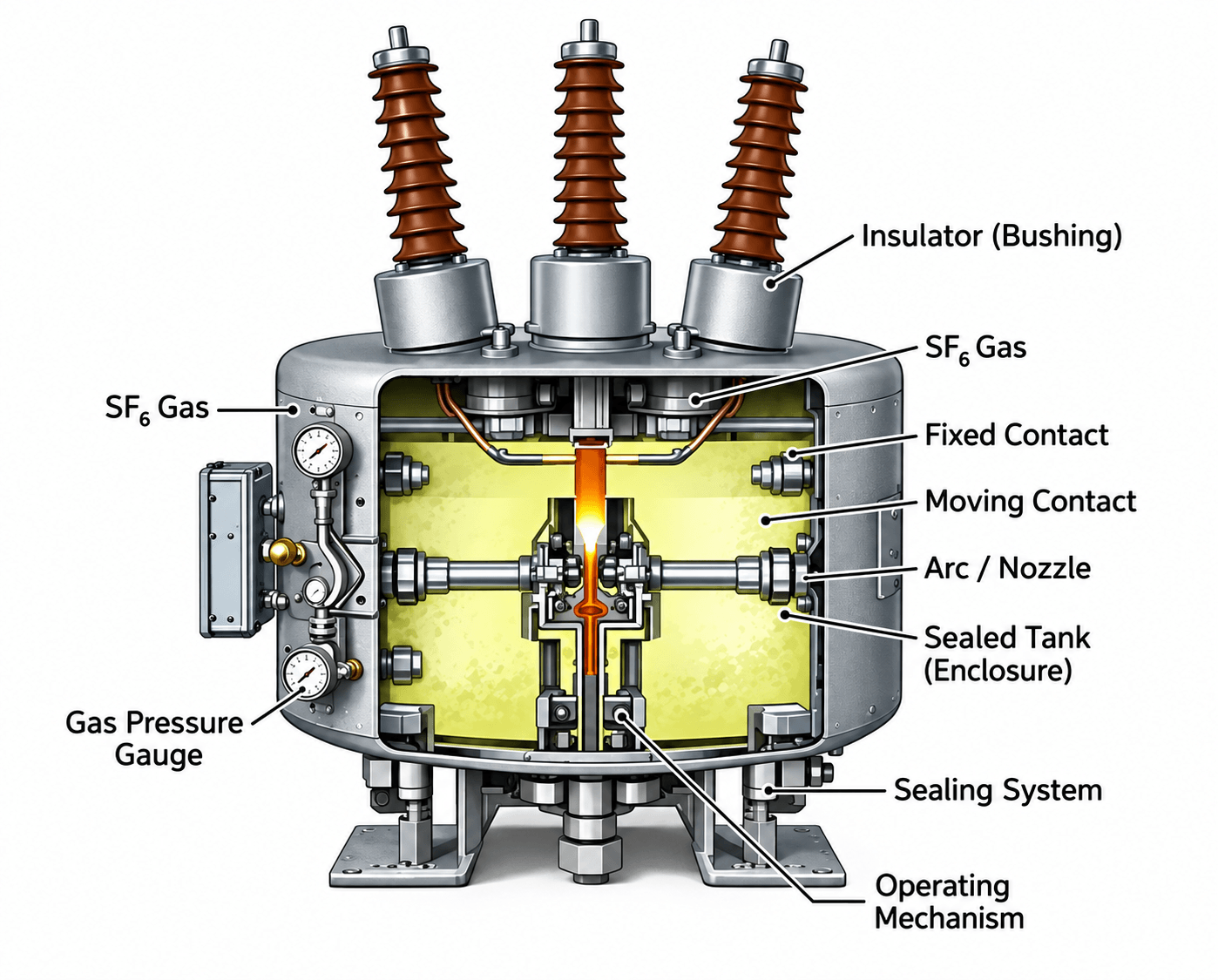
Internal structure of an SF6 circuit breaker showing the SF6 gas chamber, arc-extinguishing system, and contact mechanism.
|
|
|
SF6 gas provides excellent dielectric strength and arc-quenching capability, allowing circuit breakers to interrupt high fault currents reliably. When a fault occurs, SF6 quickly extinguishes the electrical arc and restores insulation between contacts, ensuring stable operation in high-voltage power systems.
The high dielectric strength of SF6 enables circuit breakers and gas-insulated switchgear (GIS) systems to achieve a significantly more compact design compared with conventional air-insulated equipment. By reducing installation space requirements by up to 90%, modern SF6 GIS provides an efficient solution for substations where space availability is a critical consideration.
SF6 circuit breakers are capable of interrupting high short-circuit currents with fast and reliable arc extinction. Modern SF6 breakers can achieve interrupting capacities of 63 kA or higher, with arc-quenching completed within just 2–3 cycles. This high-performance fault-clearing capability makes them widely used in transmission substations and high-voltage networks where reliable protection is critical.
The sealed construction protects internal components from environmental contamination, resulting in maintenance intervals of 10-15 years. SF6's non-flammable nature eliminates fire risks, and sealed chambers provide consistent performance regardless of weather conditions, altitude, or humidity.
SF6 circuit breakers are widely used in high-voltage electrical systems where reliable fault interruption, insulation performance, and operational stability are required. Their applications include transmission networks, substations, industrial power systems, and renewable energy projects.
SF6 circuit breakers are widely applied in high-voltage transmission systems to protect power lines, transformers, and other critical equipment from short-circuit faults. Their high interrupting capability and reliable arc-quenching performance make them suitable for transmission networks where continuous power delivery and system stability are essential.
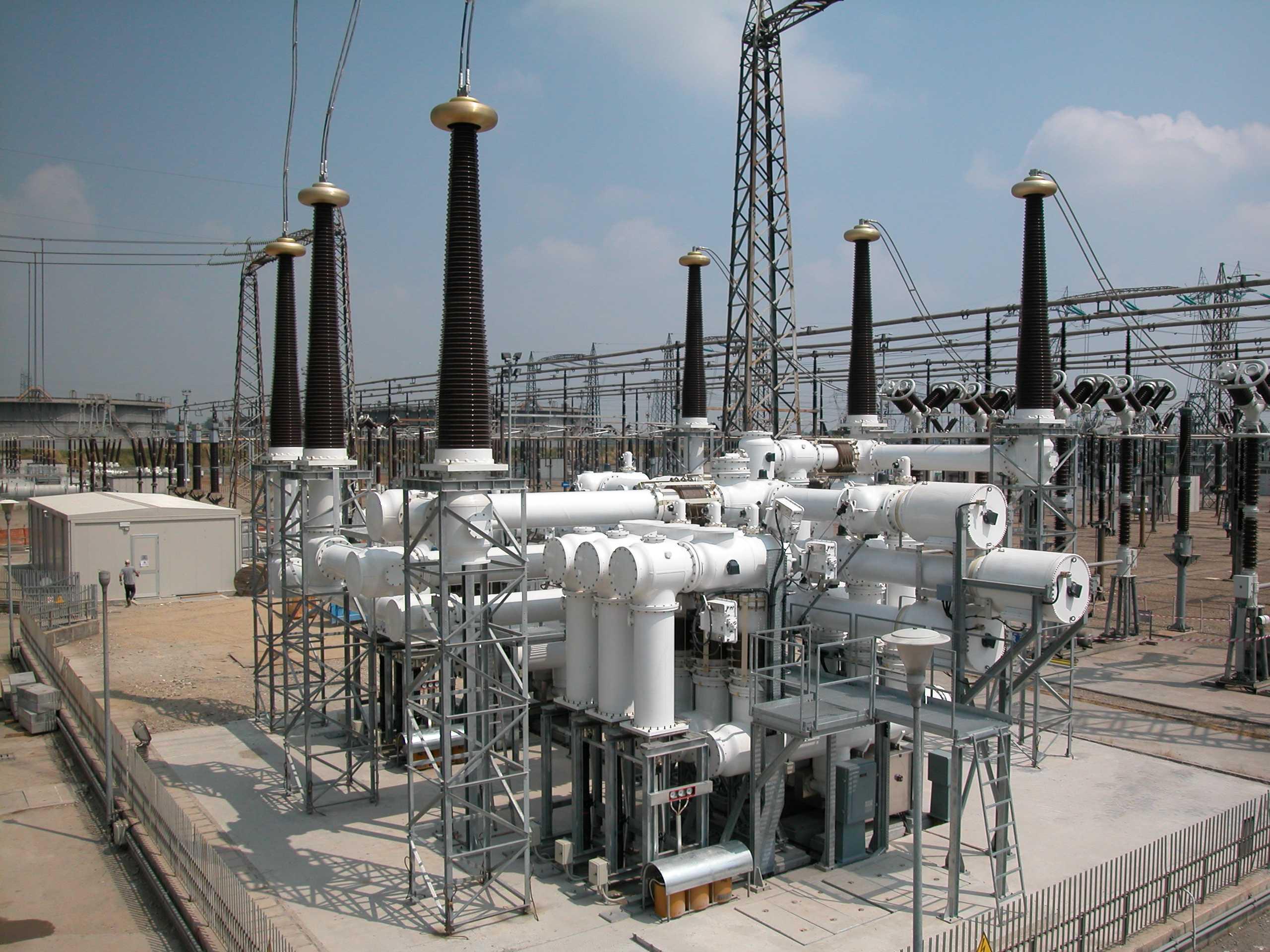
SF6 circuit breakers are commonly integrated into gas-insulated switchgear (GIS) and high-voltage substations where compact design and reliable switching performance are required. GIS solutions using SF6 insulation are especially suitable for urban substations, offshore installations, and locations with limited installation space.
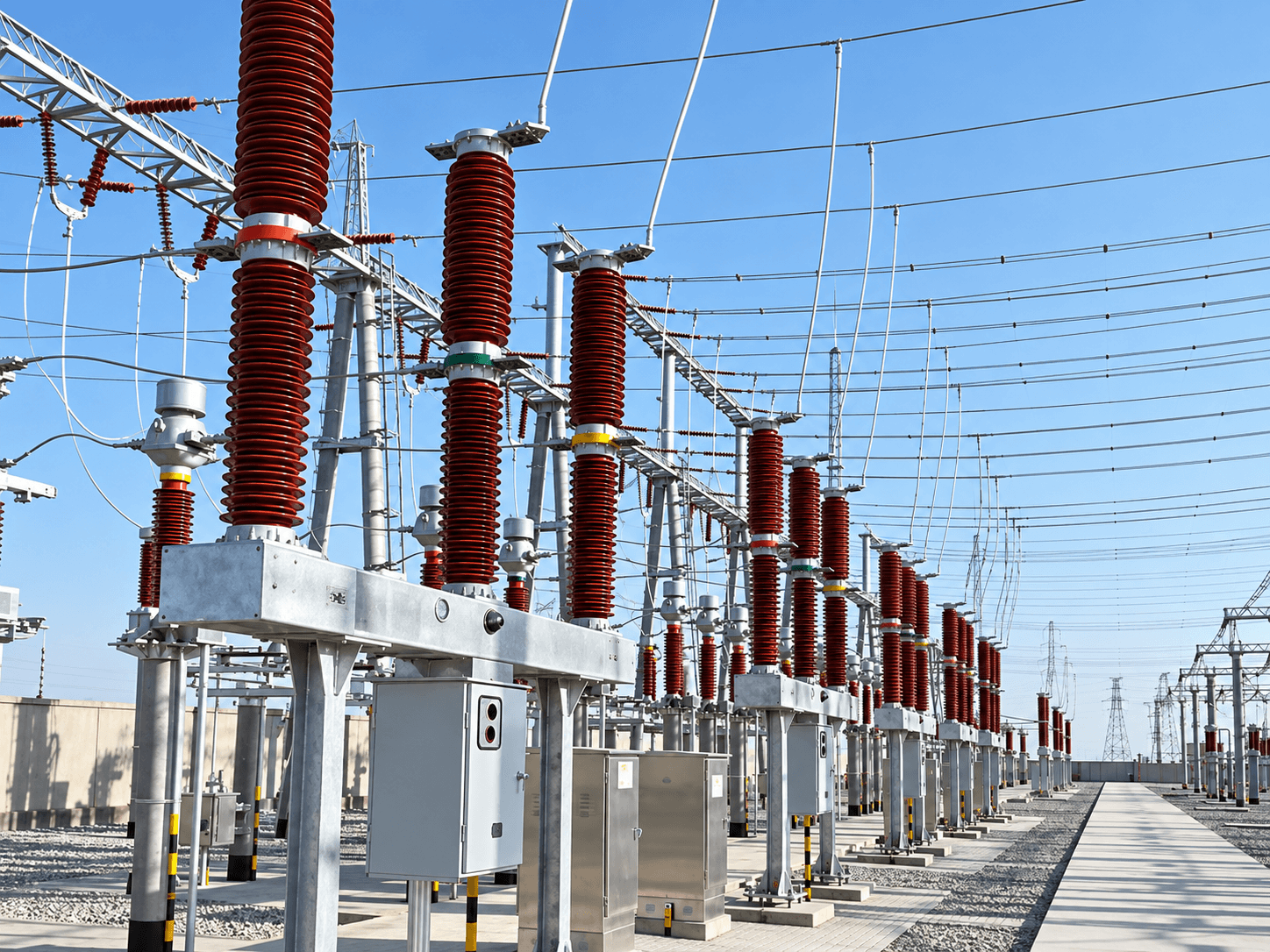
SF6 circuit breakers are also used in renewable energy projects, including wind farms and solar power plants, to protect collection systems and grid connection equipment. They help manage switching operations and support reliable integration of renewable generation into transmission and distribution networks.

Large industrial facilities use SF6 circuit breakers to protect internal power distribution networks and critical electrical equipment. Their reliable fault interruption capability helps improve power system safety and operational reliability in industries where stable electricity supply is essential.
Different circuit breaker technologies are designed for different voltage levels and operating requirements. The following comparison highlights the typical applications and main characteristics of SF6, vacuum, air, and oil circuit breakers.
| Technology | Typical Applications | Main Characteristics |
|---|---|---|
| SF6 Circuit Breaker | High-voltage transmission systems and substations | High dielectric strength, excellent arc-quenching capability, and reliable fault interruption |
| Vacuum Circuit Breaker (VCB) | Medium-voltage distribution systems | Fast switching operation, low maintenance requirements, and no insulating gas |
| Air Circuit Breaker (ACB) | Low-voltage power distribution systems | Simple structure and widely used for low-voltage protection |
| Oil Circuit Breaker (OCB) | Legacy power systems | Traditional technology with higher maintenance requirements |
Selecting the right circuit breaker depends on factors such as system voltage, short-circuit level, installation environment, and operational requirements. Fenarro's engineering team provides free technical support to help evaluate suitable SF6 circuit breaker solutions for different high-voltage power applications.
Existing SF6 circuit breakers can continue to provide reliable performance through proper gas management practices. Leak monitoring, gas recovery, recycling, and sealed enclosure designs help minimize SF6 emissions while maintaining safe and stable operation throughout the equipment lifecycle.
New insulation gas technologies are being developed to reduce the environmental impact of high-voltage switchgear. Alternative gas mixtures based on fluoronitriles, fluoroketones, and other low-GWP solutions aim to provide similar insulation and arc-quenching performance while reducing greenhouse gas emissions.
Vacuum circuit breaker technology has become a widely used alternative in medium-voltage applications due to its reliable switching performance and low environmental impact. Ongoing development is extending vacuum technology toward higher voltage levels, creating potential alternatives for some applications traditionally served by SF6 equipment.
|
|
| Fenarro Indoor High Voltage Vacuum Circuit Breakers -12kV to 40.5kV Range | Fenarro Outdoor High Voltage Vacuum Circuit Breakers - Advanced Distribution Network Protection |
Understanding the differences between vacuum and SF6 circuit breakers is important when selecting the right technology for a project. Our guide on Vacuum Circuit Breaker vs. SF6 Circuit Breaker: Which Fits Your Project? provides a detailed comparison of their performance, applications, and selection considerations.
Leak detection and monitoring: Regular testing using sensitive equipment minimizes emissions
Gas recycling: Proper recovery and reclamation prevents atmospheric release
Sealed design: Hermetically sealed compartments with annual leak rates < 0.1%
Proper handling procedures: Trained personnel and specialized equipment ensure safe handlin
SF6 circuit breakers continue to be widely used in high-voltage power systems due to their reliable switching performance, excellent insulation capability, and proven operational stability. While alternative technologies are developing, SF6 remains an important solution for many transmission, substation, and industrial applications.
Fenarro provides high-voltage SF6 circuit breakers for transmission networks, substations, and industrial power applications, supporting reliable protection and long-term system operation.
Contact Fenarro for technical support and SF6 circuit breaker solutions tailored to your project requirements.
Ethan
With over 16 years of experience in high-voltage electrical equipment, Ethan‘s current focus is on HV switchgear and system solutions for industrial and renewable energy sectors.He specializes in HV SF6 and vacuum circuit breakers for outdoor applications, indoor HV vacuum circuit breakers, disconnect switches, air-insulated switchgear (AIS), fuses, surge arresters, transformer neutral equipment, and vacuum load break switches.As an industry columnist and technical consultant, he provides reliable, practice-based insights to help engineers improve system reliability and operational safety.


